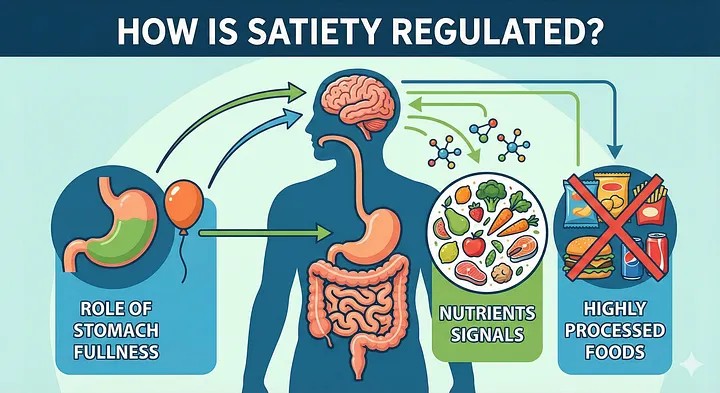
Key Takeaways
-
Volume Matters: Foods that add bulk to the stomach, such as those high in fiber, signal fullness more effectively than calorie-dense, highly processed snacks.
-
Nutrient Choice: Prioritize protein and complex carbohydrates to stabilize hunger and promote longer-lasting satiety compared to simple, sugary alternatives.
-
Beware of Hyper-palatability: Highly processed foods are engineered to overwhelm taste sensors, which can dull your appreciation for natural flavors and disconnect you from your body’s true hunger and satiety signals.
The Role of Stomach Fullness
One of the key signals of satiety is the physical fullness of the stomach. Foods that are small, easy to swallow, and barely chewed—like many industrialized snacks—are digested quickly and leave the stomach almost as fast as they arrive. This lack of bulk means the stomach doesn’t stay full for long, reducing the signals to stop eating.
Additionally, calorically dense foods, which are often small in size but rich in calories, can be particularly effective for gaining weight. These foods provide a large number of calories in a small volume, which can bypass the physical fullness signals and lead to overeating. Even in cases of bariatric surgery, where the stomach’s size is significantly reduced, frequent snacking on such foods can hinder weight loss because these snacks are absorbed faster than they can promote satiety. The result? A perpetual cycle of hunger and overeating.
Nutrients and Their Impact on Satiety
Different nutrients have varying effects on satiety. Here’s how they stack up:
- Proteins: Often considered the most satiating macronutrient, proteins take longer to digest and release hormones that signal fullness.
- Fats: Fats slow down stomach emptying, helping you feel full for longer periods. However, they are calorie-dense, so portion control is crucial.
- Carbohydrates: These provide quick energy, but the type matters. Simple carbs, like those in sugary snacks, are absorbed quickly and lead to rapid hunger spikes. Complex carbs, like whole grains, digest slower and keep you satisfied.
- Dietary Fiber: Found in fruits, vegetables, and whole grains, fiber adds bulk to meals and slows digestion. This not only promotes fullness but also supports healthy digestion overall.
The Problem with Highly Processed Foods
Highly processed foods are often engineered to be hyper-palatable, with additives like corn syrup, artificial sweeteners, and monosodium glutamate (MSG) amplifying flavors to make them irresistible. This intense flavor stimulation overwhelms our senses and diminishes the sensitivity of our taste buds, making it harder to enjoy more subtle, natural flavors.
As a result, fruits, vegetables, whole grains, and other minimally processed foods can become less appealing. The overwhelming taste of these foods not only impairs our ability to gauge how much we’re eating, leading to overconsumption, but it also triggers emotional eating—eating for pleasure rather than nutritional need. This disconnect from our body’s hunger and satiety signals makes it easier to binge on processed snacks and contributes to weight gain.